

Everything is bigger in Texas — even the limescale! And with a big limescale problem comes a collection of significant issues for commercial washers. As a property manager, you want to protect your washers from damage as much as possible to ensure seamless operations and longevity. But with our state’s hard water causing havoc with mineral buildup, this might be easier said than done.
In this article, we’ll discuss the hard truth about Texas water, including what makes our water harder than other states and how buildup can affect cleaning efficiency and equipment damage. We then address this issue with a practical and efficient solution — our revenue-sharing model.
Hard water refers to water containing high levels of dissolved minerals, such as magnesium and calcium. Texas is home to some of the hardest water in the country, with an average water hardness of over 200 parts per million. On the water hardness scale, this average falls within the very hard water category.
The state’s diverse landscapes and geological formations contribute to the creation of our hard water. Minerals are absorbed and carried as water flows through rocks and soil, especially in underground deposits of limestone, chalk, or gypsum. The longer the water percolates and dissolves these minerals, the harder the water becomes. The dissolved mineral buildup in hard water is called limescale.
Here are a few things that hard water does to equipment that lead to damaged appliances:
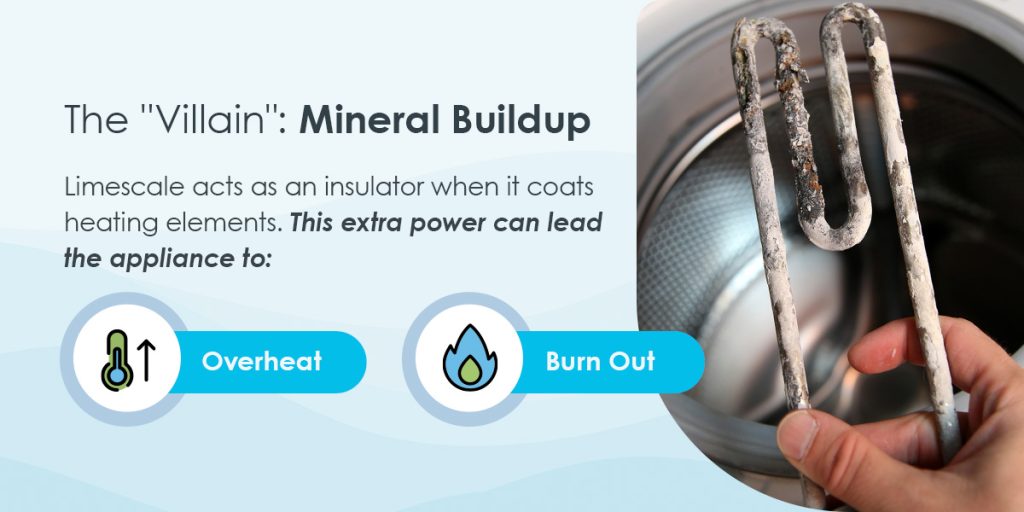
Mineral buildup is the reason hard water ruins heating elements, pipes and valves. It’s a leading cause of early failure in washer components. Limescale is easily spotted in cold water, as it appears milky. However, when water with limescale is heated, it coats and sticks to the appliance’s internal parts, resulting in inefficient and longer washes, lower water pressure and permanent damage to the machine itself.
This mineral build up affects many different components in washing machines, such as:
Damage to these components reduces the efficiency of your laundry facility’s appliances. For your clients or residents, this mineral buildup can also result in stiff or rough clothing that has white residue, unpleasant smells in the drum, water that stays cold or takes a long time to warm up, and longer, noisier wash cycles.
Buildup damage is one of the many hidden costs of DIY laundry management. Mineral buildup wears appliances down faster, leading to replacements sooner than anticipated. Once damage is done to your equipment, repairs or parts replacements can cost even more than you paid for the machine itself. In addition to maintenance and repair costs, you’ll also lose money while operating a limescale-damaged washer. Elements coated in limescale need more power to function, which results in higher energy bills.
To help your commercial washers run smoothly and efficiently, we take on the risk of handling hard-water issues and laundry equipment maintenance for you. With our revenue-sharing model, we pay for the parts and labor needed to fix your equipment. When hard water destroys a valve, we’ll fix it for free. We deduct our equipment leasing fees from revenue generated by your laundry facility. Any funds above your fees are returned to you as profit. This lets you enjoy the perks and benefits of leased washers without the unexpected maintenance costs and stress.
Some benefits of our laundry revenue-sharing model include:
Hard water may be unnoticeable at first, but the damage it causes to washers and other water-based appliances isn’t. To avoid the unexpected expenses and operational downtime, Caldwell & Gregory has you covered with commercial laundry services in Texas. With our beneficial revenue-sharing model, you can keep your cash while we handle the calcium.
With over 30 years of industry experience, we’re always happy to go above and beyond for our clients. If you’re operating in Texas and looking to protect your laundry investment, don’t let the hard water drain your budget. Feel free to contact our experts and get a managed laundry quote today.