

Choosing a laundry payment system for your property directly impacts your revenue, operational efficiency and resident satisfaction. Should you stick with coins, upgrade to card-based systems or embrace app-based mobile payments? The answer depends on your property’s unique needs, your residents’ expectations and your long-term goals.
The housing industry has undergone a dramatic digital shift. Online rent payments surged from 4% to over 51% in the last decade, signaling a clear change in tenant behavior. Today’s residents expect modern, digital convenience in every aspect of their housing experience, including the laundry room. This guide provides a framework to help you evaluate your options and choose a payment system for your property.
Broadly, property managers have four commercial laundry payment system options — coin-operated machines, card-based systems, app-based mobile platforms and hybrid solutions.
You are likely familiar with traditional coin-operated laundry machines if you have ever been to a laundromat. Residents insert quarters directly into the machine to start a cycle. Coin-operated machines are intuitive to use, regardless of age or tech comfort level. They operate independently without internet connectivity and incur no credit card processing fees.
However, cash stored in coin boxes makes these machines vulnerable to theft and vandalism. Additionally, manual collection, counting and depositing require significant staff time, and tenants must keep quarters on hand, which many find frustrating.
While cash still accounts for 14% of consumer payments, its use continues to decline. For properties seeking to modernize, coin vs. card laundry systems present a clear contrast in convenience and operational efficiency.
Debit and credit cards account for 65% of all consumer payments in the United States. This cashless laundry payment system bridges the gap between traditional methods and cutting-edge technology.
A laundry card payment system allows residents to use dedicated reloadable laundry cards or standard credit and debit cards. Residents can reload property-issued cards at kiosks or online, while card readers accept payment directly at the machine.
Cashless systems often generate higher per-cycle revenue, while digital payments eliminate the need to store cash on-site. You’ll also have the flexibility to adjust pricing in precise increments and offer time-of-day discounts. However, before you switch to a card-based payment system, you should have a reliable internet connection and prepare to pay a small per-transaction fee for credit card processing.
Modern laundry payment apps deliver a competitive amenity advantage for properties that want to advertise the use of cutting-edge technology. Mobile wallet payments have surged, increasing by 105% from 2019 to 2024, and growth continues.
An app-based laundry payment system lets residents download a mobile app, link a payment method and start machines by scanning a QR code or using Bluetooth. These mobile payment laundry systems offer the most advanced feature set. Users can check machine availability, start cycles and receive push notifications from their phones when their laundry cycle finishes running. Meanwhile, property owners gain insights into peak usage times, machine performance and revenue trends.
While younger, tech-savvier residents will quickly adapt to these machines, residents without smartphones or with older devices may encounter barriers.
Jumping to a fully cashless system can feel risky. Some residents may not own smartphones, and others may prefer familiar, time-tested methods. A hybrid setup gives everyone a payment option that works for them, reducing friction and maximizing participation. This compromise serves all resident demographics by allowing you to install machines that accept coins and offer a cashless option, such as card or app payments.
Adoption rate data is valuable when using a hybrid system. You can confidently phase out coin operations if the statistics show that most of your residents have adopted the app or card system after a year. This approach reduces risk while moving your property toward modern payment infrastructure.
Choosing the best laundry payment system for apartments, campuses or other properties requires evaluating three pivotal factors.
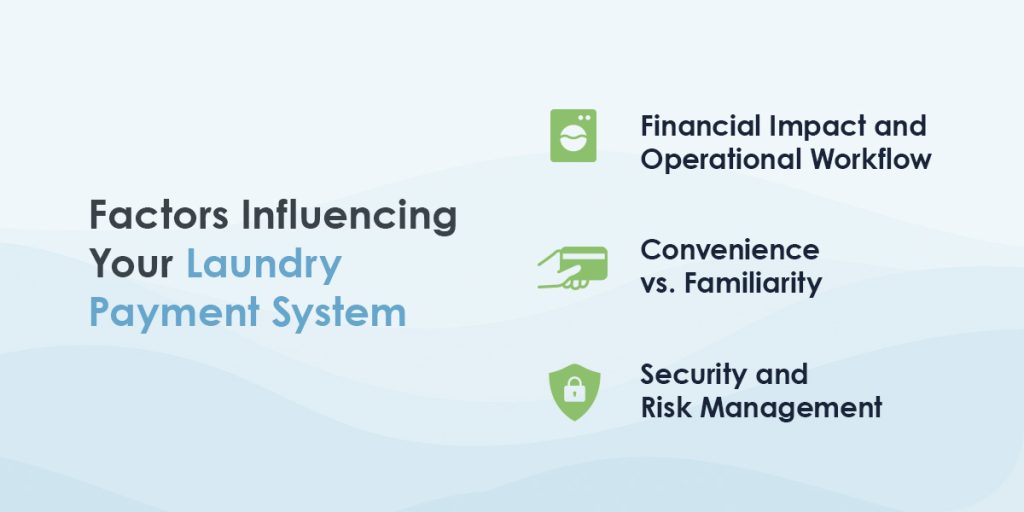
Cashless systems typically drive higher revenue. Residents who lack exact change in coins can still get their laundry done without leaving home, and digital platforms make dynamic pricing strategies easier to implement. While coin systems have lower initial costs, cashless systems often deliver faster returns through higher revenue and lower labor costs. Coin-operated machines limit you to quarter increments, while cashless systems allow precise pricing like $2.75 per wash and time-of-day discounts.
Amenities drive resident satisfaction, and the laundry experience is no exception. Cashless options offer undeniable convenience — no more hunting for quarters and the ability to monitor cycles remotely. Some residents may prefer the straightforward simplicity of coins, particularly older adults or those less comfortable with technology. Understanding your resident population and choosing a system that aligns with their preferences can contribute to retention and satisfaction.
Cash stored in coin boxes presents a security liability. Theft and vandalism are ongoing concerns, and incidents can damage machines, disrupt service and create safety risks. Cashless laundry payment systems eliminate the risk of cash theft from coin boxes. With no physical cash on-site, there’s nothing to steal, reducing liability and giving property owners peace of mind.
The ideal payment system varies by property type. Customizing your approach to your residents’ needs and expectations maximizes adoption and satisfaction.
Multifamily apartment buildings typically serve a wide range of ages, income levels and comfort with technology. Hybrid systems are often the ideal starting point for this environment. Offering coin and cashless options ensures accessibility for all residents while encouraging them to adopt a more modern payment method. You can adjust your approach accordingly as usage data reveals resident preferences. Caldwell & Gregory’s laundry solutions for multi-housing communities have this flexibility in mind.
Younger generations quickly adopt new technologies, making app-based systems a natural fit for academic environments. College and university students are digital natives who expect technology to simplify every aspect of their lives. An apartment laundry app payment system is a baseline expectation for this demographic. App-based systems allow students to check machine availability from their dorm rooms, receive alerts when cycles finish and pay seamlessly without carrying cards or coins.
Caldwell & Gregory has successfully deployed these systems at scale, including a smart laundry installation on campus at Campbell University.
Senior living communities require a different approach. Simplicity and ease of use take priority over advanced features for many older residents. A system requiring app downloads, account creation and payment linking may create unnecessary barriers. Dedicated reloadable laundry cards or simple tap-to-pay credit card readers often work best, eliminating the need for smartphones while still providing the benefits of cashless payments — enhanced security, easier revenue tracking and reduced reliance on coins.
There’s no one-size-fits-all laundry payment method. The best choice for your property depends on your residents, operational priorities and revenue goals.
Caldwell & Gregory takes a consultative approach to commercial laundry solutions. We listen to your needs, analyze your property’s unique circumstances and design a custom program that works for you. Whether you choose coin, card, app-based or hybrid payment systems, we’ll handle equipment selection, installation, ongoing maintenance and revenue management.
Request a proposal today to start your partnership with us.